

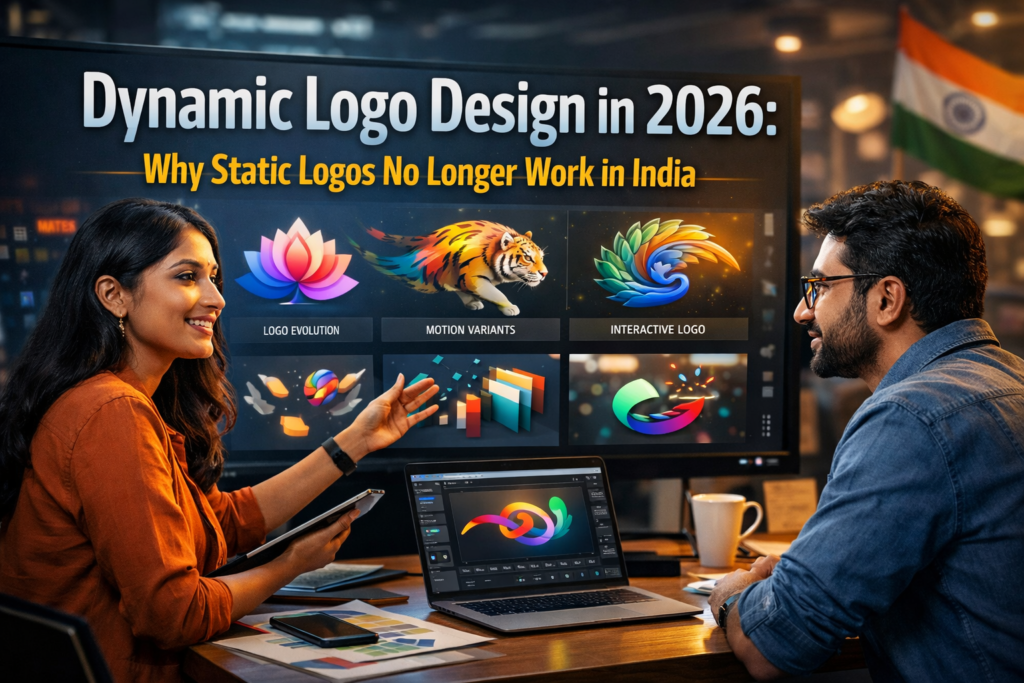
Dynamic Logo Design in 2026: Why Static Logos No Longer Work in India
In today’s digital world, a single static logo is no longer enough.
Brands now operate across apps, websites, social media, and regional markets. Because of this, companies are shifting towards dynamic logo systems that can adapt to different situations while maintaining a strong identity.
Global brands like Nike and Coca-Cola have already adopted this approach. In India, companies such as Swiggy and Zomato are taking it even further with culturally relevant variations.
This article explains dynamic logos in a clear way and shows how businesses in India can use them effectively.
What Are Dynamic Logos
Dynamic logos are flexible brand identities that change based on platform, context, or audience.
Instead of using one fixed logo everywhere, brands create multiple versions that follow a common design system.
Key Features of Dynamic Logos
- Flexible structure
A dynamic logo is designed as a system, not a single file. It includes multiple variations that work together. - Consistent identity
Important elements like color, shape, or typography stay consistent so people can still recognize the brand. - Context-based changes
The logo adapts depending on where and how it is used.
Types of Dynamic Logo Systems
Responsive Logos
- Definition
These logos adjust their size and layout for different screens. - Why it matters
Your logo must look clear on a small mobile icon as well as on large displays. - Example
A simplified version for app icons and a detailed version for websites.
Adaptive Logos
- Definition
These logos change depending on region, language, or campaign. - Why it matters
India has multiple languages and cultural preferences. - Example
Using regional language text or campaign-based design elements.
Interactive Logos
- Definition
Logos that respond to user interaction. - Why it matters
Digital platforms require engaging visual elements. - Example
Animated logos in apps or hover effects on websites.
Why Dynamic Logos Are Important in India
Cultural Diversity
- Different regions
India has diverse languages and traditions. - Frequent festivals
Brands have many opportunities to connect emotionally. - Localized communication
A flexible logo helps brands feel more relevant.
Short Attention Span
- Fast scrolling behavior
Users spend only a few seconds on content. - Visual impact matters
Changing visuals attract more attention. - Improved recall
Context-based branding is easier to remember.
How Indian Brands Are Using Dynamic Logos
Swiggy
Swiggy uses dynamic logos in a practical way.
- Festival-based icons
The app icon changes during major festivals. - Contextual updates
Designs change during cricket seasons or weather events. - User connection
These changes help build emotional engagement.
Zomato
Zomato focuses on subtle but effective changes.
- Campaign-based variations
Logos adjust based on marketing campaigns. - Clean design approach
Variations remain simple and recognizable. - User-focused updates
Branding aligns with user context and behavior.
Top Logo Design Trends in 2026
Neo Minimalism
- Soft design approach
Less harsh and more human-friendly. - Warm color palettes
Helps create emotional connection.
Typography Driven Logos
- Custom fonts
Unique identity through lettering. - Cultural influence
Regional styles add authenticity.
Swiggy
Swiggy uses dynamic logos in a practical way.
- Festival-based icons
The app icon changes during major festivals. - Contextual updates
Designs change during cricket seasons or weather events. - User connection
These changes help build emotional engagement.
AI Generated Variations
- Faster design creation
AI helps generate multiple logo versions. - Personalization
Logos can adapt to user preferences.
How to Build a Dynamic Logo System
Step 1 Define Core Identity
- Primary colors
- Logo shape
- Typography
Keep these elements consistent across all variations.
Step 2 Create Variation System
- Festival versions
- Regional versions
- Platform-specific designs
Define clear rules for what can change.
Step 3 Implement Across Platforms
- Mobile applications
- Websites
- Social media
Ensure consistency everywhere.
Step 4 Check Cultural Relevance
- Research cultural meaning
- Test designs with users
- Avoid sensitive elements
Benefits of Dynamic Logos
- Better brand recall
Users remember context-based visuals more easily. - Higher engagement
Seasonal and campaign designs perform better. - Stronger emotional connection
Cultural relevance builds trust. - Faster market growth
Easier expansion into new regions.
Future of Dynamic Logos in India
- Location-based branding
Logos may adapt based on user location. - Voice branding
Audio identities will grow with voice assistants. - AR and VR integration
Interactive brand experiences will increase. - AI personalization
Logos will adapt to individual users.
Conclusion
Dynamic logos are becoming essential for modern brands.
In a diverse and mobile-first country like India, businesses need flexible branding systems that can adapt to different contexts while maintaining a strong identity.
A logo is no longer just a visual symbol. It is a system that evolves with the audience.